

Roboscreen GmbH
Booth number: 59 - 01
www.roboscreen.com
About us
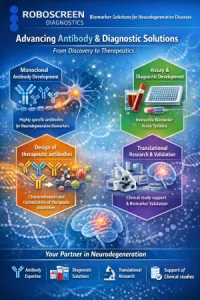
Roboscreen GmbH is a specialized biotechnology company focused on advancing biomarker-based solutions for neurodegenerative diseases. With expertise spanning antibody development, diagnostics, and translational research, Roboscreen supports partners throughout the process, from early discovery to clinical and therapeutic applications.
One of our core strengths lies in the rapid development of highly specific monoclonal antibodies that target biomarkers of neurodegenerative disorders. Drawing on our extensive scientific knowledge, we develop antibodies with excellent specificity and performance that are tailored to demanding research, diagnostic, and clinical requirements.
Building on our antibody expertise, we develop and establish high-quality assay systems for blood-based biomarkers of neurodegenerative diseases, as well as molecular diagnostic test formats. Our assay development capabilities enable the creation of sensitive, reliable, and scalable solutions that are suitable for biomarker validation, clinical studies, and diagnostic implementation.
In addition, we offer comprehensive characterization and selection of monoclonal antibodies for therapeutic suitability. Where appropriate, we support the preparation of antibody candidates for therapeutic development, including advanced validation and selection processes to facilitate downstream partnering and translation.
Roboscreen GmbH is a reliable and experienced partner for biotech and pharmaceutical companies seeking innovative, antibody-based tools, diagnostic solutions, or early-stage therapeutic candidates in the field of neurodegeneration. We look forward to connecting with partners and sponsors to explore collaborative opportunities.
Address
Hohmannstr. 7
04129 Leipzig
Germany
E-mail: info@roboscreen.com
Phone: +49 341 989734-0
Internet: www.roboscreen.com
Contact person:
André Reinhardt
Sales Manager & Shareholder
E-mail: andre.reinhardt@roboscreen.com
Phone: +49 176 17777131
Products & Services
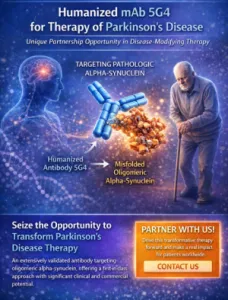
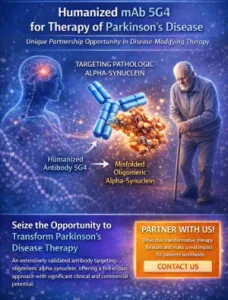
Humanized mAb 5G4 – a structure-specific antibody for the treatment of Parkinson's disease
Parkinson’s disease is a progressive neurodegenerative disorder with no curative or disease-modifying treatments available. Current therapies provide only symptomatic relief, underscoring a major unmet medical need.
At the core of Parkinson’s pathology lies alpha-synuclein (SNCA). Its misfolding and aggregation, particularly into toxic oligomeric species, initiate neuronal dysfunction and enable the prion-like spread of pathology throughout the brain. Increasing evidence identifies these oligomers as the most neurotoxic and clinically relevant forms, making them an ideal therapeutic target. However, antibodies that have previously been tested in clinical trials show low selectivity and bind not only to pathological SNCA aggregates, but also to physiologically relevant monomeric SNCA molecules. This increases the risk of undesirable side effects and reduces the potential clinical efficacy.
Together with the Fraunhofer Institute for Immunology and Cell Therapy in Leipzig, we developed the patented antibody 5G4 (DE102011008153) into a new and humanized clone according to GMP guidelines. We extensively validated the humanized antibody using in vitro cell culture and in vivo animal models for Morbus Parkinson. A key difference and unique feature compared to previous antibody-based approaches is that 5G4 binds to structure-specific, pathologically aggregated SNCA structures, rather than to monomeric SNCA.
For the next developmental phase, we invite strategic partners to join us in translating this innovation into a transformative treatment for patients worldwide. With strong scientific rationale and significant clinical and commercial potential, this program represents an attractive partnering opportunity to advance a first-in-class disease-modifying therapy.
Neuro IP Kit
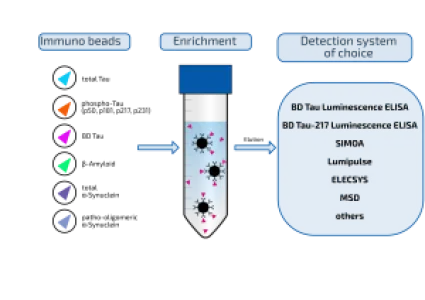
Detecting neurodegeneration (ND) biomarkers in plasma is challenging due to their low abundance.
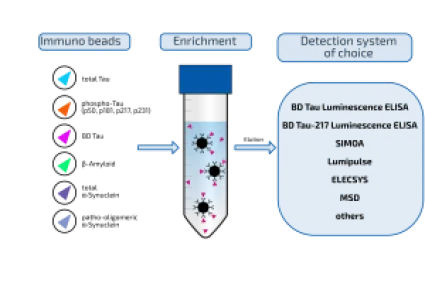
Our Neuro IP Kit enables easy enrichment of the neurodegeneration-relevant proteins total Tau, different phospho-Tau´s (p50, p181, p217, p231), brain-derived Tau, beta-Amyloid (Aβ), total α-Synuclein, and patho-oligomeric α-Synuclein from plasma by immunoprecipitation. As a positive side effect, all non-specific matrix effects that can interfere with downstream analysis are eliminated. After enrichment, a detection system of choice can be applied (BD Tau LUM ELISA, BD Tau-217 LUM ELISA, SIMOA, Lumipulse, ELECSYS, MSD, ELISA).
Brain-derived Tau mAb 2B8
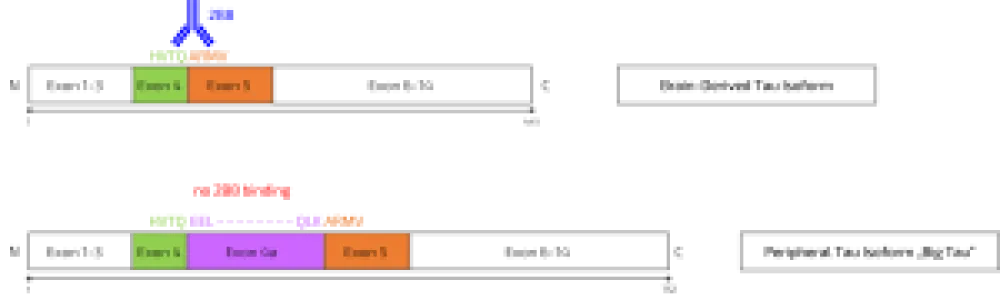
Tau is a microtubule-associated protein highly expressed in neurons, where it plays a critical role in microtubule stabilization and axonal transport. Brain-derived Tau originates from the central nervous system and reflects neuronal physiology and pathology, including neurodegenerative processes associated with tauopathies. In contrast, peripheral Tau is expressed by non-neuronal tissues and includes longer “Big-Tau” isoforms that contain the exon 4a insert, which are not representative of CNS pathology.
Conventional blood-based Tau measurements capture a heterogeneous mixture of central and peripheral Tau species, thereby limiting their specificity for brain-derived signals. To address this challenge, we have developed the monoclonal antibody 2B8 that selectively recognizes continuous exon 4–5 sequences present in brain-derived Tau isoforms, while showing no binding to peripheral Tau variants containing the exon 4a insert. This molecular specificity enables the selective detection of CNS-derived Tau in blood-based samples.
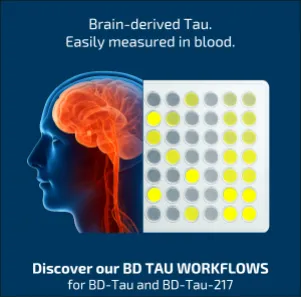
Workflows for Brain-derived Tau and Brain-derived Tau-217
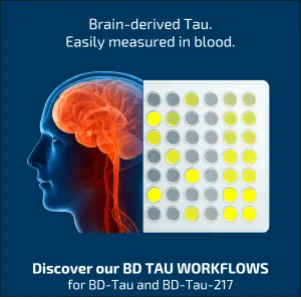
Our BD-Tau Workflows: BD Tau Neuro IP Kit & BD Tau Luminescence ELISA / BD Tau-217 Luminescence ELISA
Neurodegenerative diseases such as Alzheimer's leave molecular traces, including in the form of tau protein. However, only a small portion of the Tau protein measurable in the blood originates in the brain. Conventional tau measurement in blood, therefore, often provides inaccurate signals.
Our BD-Tau Workflows make the difference.
Through targeted immunoprecipitation and the specific detection of brain-derived tau isoforms, our workflows enable, for the first time, a sensitive and specific measurement of brain-derived tau and brain-derived tau-217 directly in the blood, using standard laboratory equipment.
HDV RNA measurement in combination with EXcaliPURE NA extraction
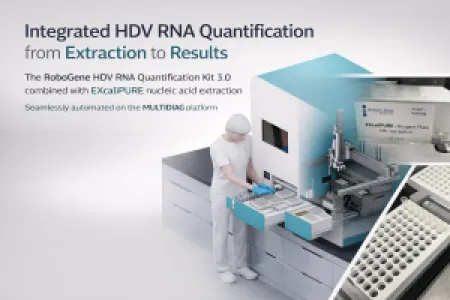
The RoboGene HDV RNA Quantification Kit 3.0, in combination with EXcaliPURE nucleic acid extraction
This is Roboscreen’s first application for the fully automated MULTIDIAG platform developed by imk Health Intelligence GmbH. The platform enables fully automated analysis of Hepatitis-DELTA RNA, the core biomarker for monitoring of patients with chronic Hepatitis-Delta, the most severe form of viral Hepatitis. As a next step, Roboscreen will add serological testing for Anti-HDV-Antibodies to the same platform, enabling serological testing and nucleic acid analyses on the same system. Tests for the other blood-borne Hepatitis viruses (HBV & HCV) will soon be available too.
In parallel, Roboscreen is preparing to extend the applications on the MULTIDIAG platform to Blood-based Biomarker (BBM) testing for Alzheimer's and other neurodegenerative diseases.
